Make.com quietly changed its pricing again
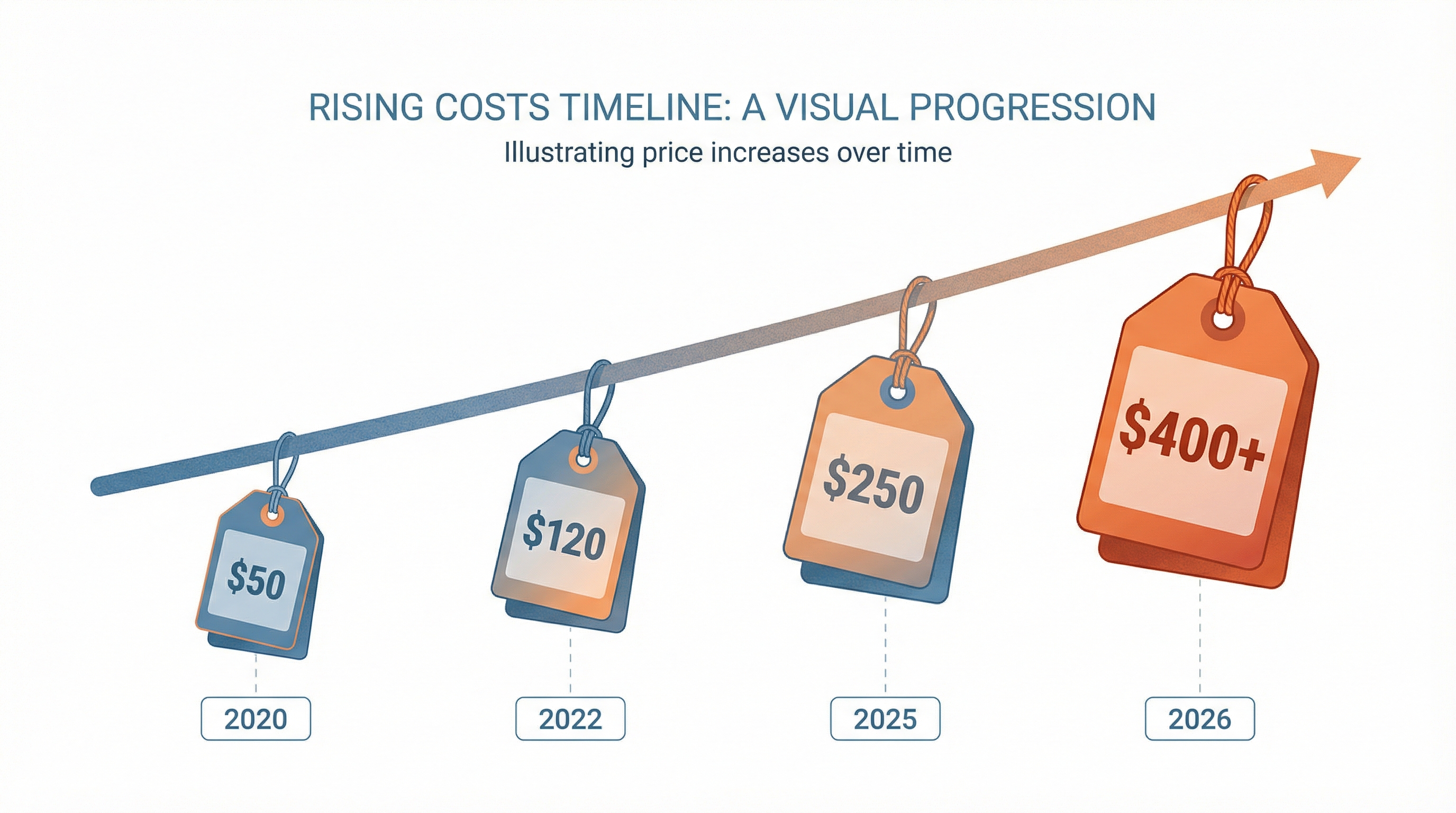
Make.com raised prices twice in four months and your workflows kept running like nothing happened. That was the point. The changes arrived as help center blog posts, not as emails to accounts paying the bills. No announcements on the main site. No banners in the dashboard. We've tracked every pricing adjustment since Celonis acquired Integromat in 2020, and the pattern is now unmistakable. Each change looks small enough to dismiss on its own, but the cumulative effect is not small, and it is accelerating.
What changed this time
On August 27, 2025, Make replaced its core billing unit. What the platform had always called "operations" became "credits," and the company framed this as a routine simplification. Existing operations converted at a 1:1 ratio. Plan prices stayed the same. The dashboard swapped one word for another. For standard automation modules, that conversion was technically accurate. For everything else, it opened a door. Variable pricing. The kind that operations never allowed.
Then on November 6, 2025, the real changes landed. Make adjusted credit limits for Core and Pro plans, restructured extra credit pricing, and added a flat 25% surcharge on all overage credits. The surcharge applies whether you buy extra credits manually or through auto-purchasing. Before November, auto-purchased credits carried a lower markup than manual purchases, giving power users a quieter path to manage usage spikes. That lower rate disappeared overnight, and both purchasing paths now carry the same 25% penalty on every credit past your plan's limit.
The November update also changed which actions consume more than one credit. Standard module executions still cost one credit each, just as operations always did. But AI-powered modules, the features Make has been promoting aggressively throughout 2025, now consume variable credits based on token count, file size, and processing complexity. A scenario that summarizes a large PDF through Make's built-in AI can burn hundreds of credits in a single execution, where that same scenario would have cost one operation six months earlier.
We've analyzed the practical impact on mid-tier accounts. One hundred module executions that used to cost 100 operations can now cost 150 to 200 credits once AI modules enter the workflow. Same workflow, same data, higher bill. The billing unit changed, and the math changed with it.
The pattern since 2020
We've watched this pricing story unfold across five stages, and each one built incrementally on the last.
In 2020, Celonis acquired Integromat for a reported sum exceeding $100 million. Integromat was the budget-friendly alternative to Zapier at the time, beloved by technical users who liked the visual builder and the generous free tier. The Basic plan cost $9 per month for 10,000 operations. Pricing was straightforward enough that the community rarely discussed it.
In 2022, Integromat rebranded to Make with a new name and new interface built on the same operations model. Prices held steady through the rebrand and the community exhaled, expecting continuity under the Celonis umbrella.
In 2023, Make restructured its plan tiers and tightened the feature gates. The entry price stayed at $9, but capabilities that were previously available on lower tiers moved behind the Pro paywall. Priority execution, full-text scenario search, and advanced scheduling all shifted upward. Same price, less value. The feature downgrade was invisible unless you compared your plan against the previous year's feature list, and almost nobody did.
In August 2025, credits replaced operations with a 1:1 conversion that was accurate for basic actions. But the new system introduced variable credit costs for advanced features, creating a billing architecture where the same workflow could cost different amounts on different days depending on data volume and AI usage.
In November 2025, the overage surcharge standardized at 25% across all purchasing methods and credit limits on Core and Pro plans tightened further.
Each change on its own looks reasonable. A billing unit modernization. A feature tier adjustment. An overage policy alignment. Stack them together across five years under Celonis ownership and the trajectory becomes impossible to ignore. The platform that was dramatically cheaper than Zapier in 2020 is steadily closing that pricing gap from below, and the credit system gives Celonis the mechanism to continue that trajectory indefinitely.

What a credit actually costs you
The sticker price looks competitive when you first visit the plans page. Core starts at $10.59 per month for 10,000 credits. Pro runs $18.82 for the same credit count with priority execution added. Teams is $34.12 with collaboration features. These numbers compare favorably to Zapier, and for simple workflows at low volume, the comparison holds.
The problem is what counts as a credit and what silently consumes your monthly allocation before a single real workflow runs.
Every module that processes data in a scenario burns at least one credit, including polling triggers that check on a schedule even when they find nothing new. Set a Google Drive trigger to watch for new files every five minutes and Make runs that check 12 times per hour, 288 times per day, over 8,600 times per month. That single trigger consumes 86% of your Core plan. All on an empty folder.
We've seen this trap catch agency owners running client automations at scale. You build a scenario that watches a folder for new assets, processes them through an AI module, and routes the output to three destination tools. The folder receives files twice a week. The trigger checks 8,600 times per month regardless. Your actual processing costs a few hundred credits. The empty polling burns thousands.
Webhooks solve the polling problem by letting the source app push data to Make only when something actually happens, which costs zero credits when idle. But Make defaults to polling triggers in the scenario builder, and the cheaper webhook option requires manual configuration that most users never discover.
Data transfer limits add a second hidden cost layer that your credit count never reflects. The Free plan caps transfers at 100 MB per month and Core provides just 1 GB. If your workflows handle PDF invoices, product images, or CSV exports, you can blow through that allocation in a single week. When you do, your scenarios pause entirely until the next billing cycle starts or until you upgrade to a higher tier.
The 40-minute execution time limit creates a third invisible boundary. Scenarios that process large batches of records or that need sleep intervals for API rate limiting can hit this cap mid-run with no advance warning. Your workflow halts and the credits consumed up to that point are gone. The remaining records sit unprocessed until someone manually restarts the job, and if you didn't build checkpoint logic into the scenario, the restart processes duplicates.
We've compiled these constraints into what we call the hidden multiplier problem. The credit price on the pricing page tells you one story. The polling triggers, data caps, execution limits, and AI module surcharges tell a very different one.
Where Make still wins and where it doesn't
We don't write hit pieces about platforms, and the honest assessment is that Make's visual scenario builder remains the best drag-and-drop automation interface for non-developers in 2026. The editor handles complex branching logic, parallel paths, and error handling more intuitively than Zapier's linear builder. Over 3,000 integrations cover most business tools, and the HTTP module lets you connect to anything with an API endpoint.
For straightforward workflows at moderate volume, Make delivers genuine value. A business running 5,000 to 8,000 standard operations per month pays $10.59 on the Core plan and gets a capable visual automation platform. That math works, and we recommend Make at that volume without reservation.
The economics break down in three specific scenarios we track across our data.
AI modules make your bill unpredictable. The same scenario processing the same document type costs different amounts each month depending on input complexity. Your automation budget becomes a guess, not a line item, and the variance increases as AI features consume more of the workflow.
Overages compound faster than you expect. At $10.59 per month for 10,000 credits on Core, each additional block of 10,000 credits costs roughly $13.24 through the overage surcharge. Your bill can double in a single month without triggering any notification that a plan upgrade would save money. No alert, no warning email, just a larger invoice at the end of the month.
Execution-based platforms expose the structural cost gap. n8n charges per workflow execution regardless of how many modules the workflow contains. A 10-step workflow running 1,000 times costs 1,000 executions on n8n versus 10,000 credits on Make. n8n Cloud starts at $20 per month for 2,500 executions. Self-hosted n8n runs for free on infrastructure costing $10 to $50 per month. Activepieces offers unlimited self-hosted execution on a $5 cloud server with no per-run charges.

The gap between per-credit and per-execution pricing widens with every step you add to a workflow. Make penalizes complexity, and the execution-based platforms reward it.
What this means for your automation budget
Celonis is a $7.7 billion process intelligence company with $771 million in annual recurring revenue and a No. 3 ranking on the 2025 Fortune Future 50 list. Make generated $52.6 million of that revenue, and Celonis needs the number to grow. More customers. More revenue per customer. Those are the only two levers for an acquired business unit.
We've seen this playbook at every venture-backed SaaS platform we track. The incremental pricing changes, the billing unit switches that enable variable costs, the overage surcharges that normalize higher spend. These are not engineering decisions. They are revenue optimization moves made by a parent company positioning for a liquidity event, whether that is an IPO, a secondary sale, or a strategic acquisition at a higher multiple.
The businesses that locked in Make pricing three years ago got the best deal in workflow automation. The businesses signing up today are entering a pricing structure designed to expand revenue per account over time. The businesses still evaluating their options have the clearest view of where this trajectory leads.
We've tracked this same trajectory across Zapier, Make, and every cloud automation platform backed by venture capital or private equity. The direction never reverses. Prices go up, free tiers shrink, overages get more expensive, and the parent company needs returns on a timeline that does not align with keeping small business customers comfortable.
This does not mean you should leave Make tomorrow. It means you should know your actual credit consumption right now. Not your plan limit. Your real monthly burn, including the polling triggers that check empty folders and the AI modules that consume variable credits. Calculate your per-workflow cost. Compare it to per-execution alternatives. Run the math while switching costs are still low.
The best time to evaluate your automation platform is before the next price change. Not after.
Pricing data verified March 2026 from Make.com official pricing page, Make Help Center announcements (August and November 2025), Celonis financial disclosures, and community forum reports.
Crux helps businesses find the right automation platform for their specific problem. We don't sell automation tools. We help you pick the right one.
Related Posts

How much does workflow automation actually cost in 2026
The number on your automation invoice is never the real cost. Platform subscriptions account for roughly 30% of what businesses actually spend on workflow automation. The rest hides in implementati...

Your Zapier bill will double every time your business grows
Per-task pricing punishes growing businesses. The more automations you build, the more steps each workflow has, the faster the bill climbs. We've tracked this pattern across community forums, Reddi...